

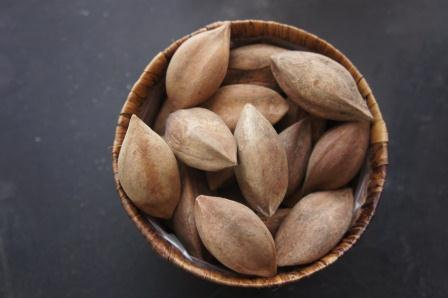
 Photo by AlmaGamil_Philippines [/caption] Pili pulp oil is clear and may appear greenish yellow. It has 56.7% oleic glycerides, 13.5% linoleicglycerides and 29.3% saturated fatty acids. Based on the analysis done by DOST Region V, the oil has very low free fatty acid (FFA) content of 0.06% and moisture content of only 0.04% which assures longer shelf life. Properties and Composition Compared to olive oil, pili pulp oil has more beta carotene, a known source of Vitamin A, caroteneoids, tocopherols (vitamin E) and phytosterols. These substances are antioxidants that protect cells from oxidation and neutralize unstable free radicals. Pili pulp oil is also a good source of protein, iodine and calcium. Uses Pili oil can be used in salad dressings, fish canning, baking and in other food preparations. The oil contains natural germicide, anti-bacterial and anti-inflammatory agents effective in healing wounds and allergies. It is also suitable for people with delicate skin and helps prevent wrinkles with its anti-aging element. It also prevents acne and pimples. The oil is now used as a main ingredient in bath soaps and massage oil, and as an additive in anti-dandruff shampoo. Indigenous knowledge gathered attests to its efficacy in treating skin diseases such as scabies and its deworming capability for livestock such as pigs and chicken. Laboratory animal studies revealed that pili oil is effective in managing cholesterol and weight. Source: bcarrd.com
Source: Business Diary Philippines



0 Comments