

 The care of a small backyard poultry can help fill the family food requirements for eggs and meat. It can also be a source of additional income. A valuable by-product is the chicken manure which is a very excellent organic fertilizer for farm and home gardens.
 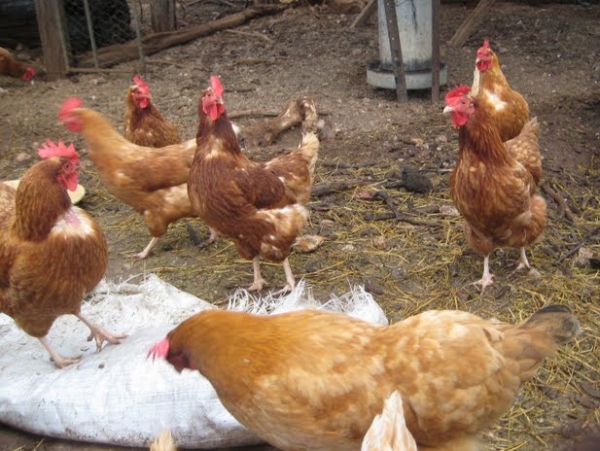 Project scheme 1. Each participating family will start with two properly selected upgraded roosters and ten layers (inabin; five for egg production and five layers to produce chicks for meat production). 2. A poultry house should be constructed using local materials for minimum expense. The house should have perch racks, roosts, nests, feedhoppers and waterers. The house should at Ieast be 7 feet high, with a floor area of 10 fl x 12 fl. It can also be provided with a fenced area as run and a growing house for the chicks. 3. The family could buy or raise the feed supplements like co., sorghum, ipil-ipil and others. 4. Recommended management practices on feeding and watering, brooding and rearing young chicks, culling and selection, record keeping, etc., should be followed. 5. Regular immunization (1-2 times a year against poultry diseases like avian pest, CRD, fowl pox, etc.) Feasibility study 1. Expenses 10 layers x P 40/layer = P400.00 2 roosters x P 50/rooster = 100.00 Housing and fence = 1,000.00 Vaccines/veterinary drugs = 25.00 Feed supplement = 500.00 Total = P 2,025.00 2. Egg Production Cycle 20 eggs/layer/month x 12 months = 240 eggs 240 eggs x 5 layers = 1,200 eggs/year 1,200 eggs/year x P 1.50/egg P 1,800.00 3. Meat Production Cycle A. Growing period Laying - 20 days Incubation - 21 days Brooding - 60 days One production cycle = 101 days or 3 cycles per year B. Production/Multiplication cycle Survival rate of chicks/hen/cycle = 10 chicks 10 chicks x 3 cycles/year = 30 chicks 30 chicks x 5 hens = 150 chicks Gross income from 5 hens/year 150 birds x P 30/bird P 4,500.00 4. Cost Analysis Gross income from egg production = P1,800.00 Gross income from meat production = 4,500.00 Total income for 3 cycles (1 year) = P6,300.00 Less: Expenses = 2,025.00 Net income = P4,275.00 Note: The roosters remain. To prevent broodiness of native chickens after laying, it is advisable to dip the birds in water. Home-made chicken feeds 4 cans yellow corn or broken rice (binlid) 1 1/2 cans rice bran (darak) 1 can dry fish meal or 2 parts fresh fish or ground snails 1 112 can copra oil meal 1/2 can copra oil meal 1/2 can ground mongo, sitao, patani or soy bean seeds 1/2 can dry ipil-ipil leaf meal 1 tablespoon salt 1 handful powdered shell/agricultural lime (apog) Notes: Use boiled gabi, ubi, cassava or camote as substitute for corn meal. Double the recommended amounts if ingredients are not in dry form. Use dried azolla or dried filter cake to replace part of the rice bran. A. Other Low-cost Poultry Feeds - bananas - fly maggots - fingerlings - azolla - snails - filter cake (dried and good) - termites - earthworms Filter cake is the dark brown-black sediment after clarification and filtration during the manufacture of sugar. B. Anti-nutrients in Some Feeds.
|
Kind |
Anti- nutrient |
Remedial measures |
|
Sorghum |
Tannin |
Milling, use only the recommended amount |
|
Legume |
Protease inhibitors lectin |
Boiling and toasting |
|
Seed/beans Cassava |
Cyanogen |
Boiling, roasting, soaking |
|
Ipi-ipil |
Mimosine |
Use recommended amont |
|
Kind |
Age of bird |
|
Avian Pest Vaccine (Intranasal method) |
1 day to 1-week old |
|
Pigeon Pox Vaccine |
One-month old |
|
Roup Vaccine |
Two-months old |
|
Avian Pest Vaccine (Prick method) |
Three-months old |
|
Fowl Pox Vaccine |
Four-months old |
|
Fowl Cholera |
Five-months old |
|
Avian Pest Vaccine |
Repeat after one year of laying |
Source: Business Diary Philippines



0 Comments